
The Gracie Mansion Bomb Plot and the Growing Domestic Terror Threat
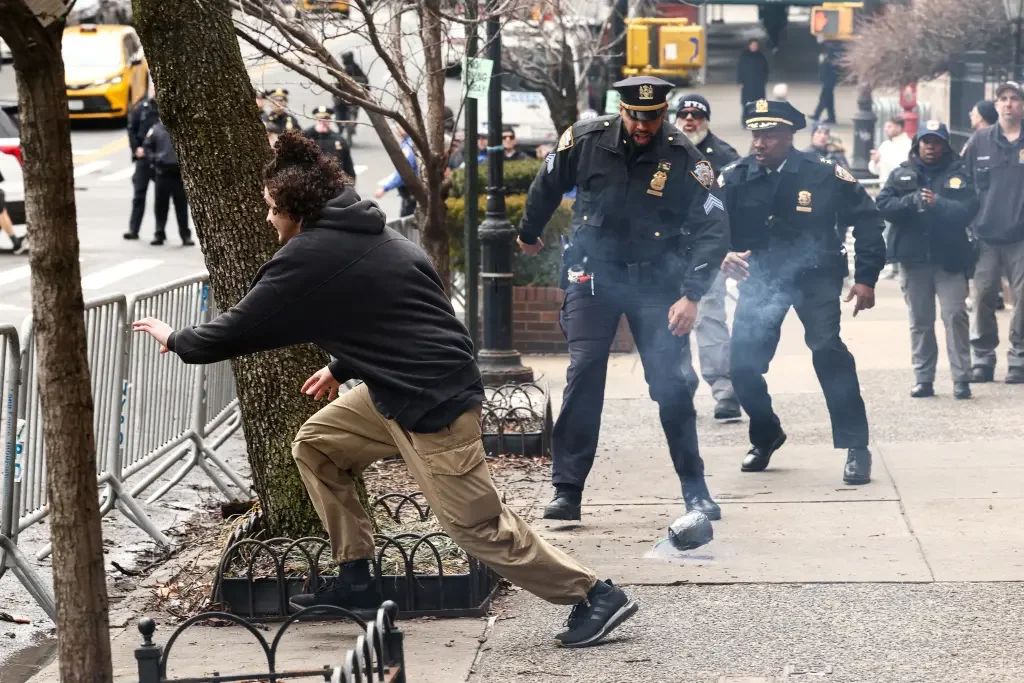
The recent attempted bombing outside Gracie Mansion in Manhattan serves as another reminder that the threat of ideologically motivated violence inside the United States remains real and persistent.
Federal authorities recently charged two young men from Bucks County, Pennsylvania after they allegedly traveled into New York City with homemade explosive devices and threw at least one improvised explosive during a protest near the mayor’s official residence. Investigators say the suspects pledged allegiance to the Islamic State and were motivated by extremist propaganda they consumed online. Fortunately, the device failed to detonate and the suspects were immediately taken into custody by NYPD officers before anyone was injured.
According to investigators, the explosive devices contained materials capable of causing serious injury or death. Authorities later recovered additional explosive components connected to the suspects during the investigation.
While this incident has generated national attention, the reality is that it reflects a threat pattern that security professionals have been studying for more than a decade.
The United States has experienced a growing number of attacks carried out by individuals who were radicalized domestically rather than directed by foreign terrorist organizations.
The Rise of Self-Radicalized Actors
Many Americans associate terrorism with coordinated international networks. However, in recent years a significant number of attacks have involved individuals who were born or raised in the United States but were radicalized through extremist propaganda and online networks.
This phenomenon is not new.
In January 2016, Philadelphia Police Officer Jesse Hartnett was ambushed while sitting in his patrol car in West Philadelphia. The attacker fired thirteen rounds at point-blank range, striking the officer multiple times. Despite being seriously wounded, Officer Hartnett exited his vehicle, pursued the suspect, and returned fire, ultimately helping stop the attacker. After his arrest, the suspect told investigators he had pledged allegiance to the Islamic State and carried out the attack in its name.
This attack was widely recognized as an example of so-called “lone actor” terrorism inspired by extremist ideology.
Since then, law enforcement and security professionals have observed similar patterns across numerous incidents.
Individuals radicalized through propaganda often operate independently, require minimal resources, and attempt to carry out attacks using readily available materials. The lack of a formal command structure makes detection significantly more difficult.
Why Traditional Deterrence Does Not Always Work
From a security perspective, ideologically motivated attackers present a unique challenge.
Traditional law enforcement strategies often rely on deterrence. Visible police presence, patrol patterns, and rapid response capabilities have historically reduced many forms of crime, particularly street violence in urban environments.
However, deterrence is far less effective against individuals who have already accepted the possibility that they may not survive the attack they intend to carry out.
Many of these attackers share characteristics with active shooters. Their mindset is often driven by ideology, grievance, or a desire for notoriety rather than personal survival.
Photographs from the recent Gracie Mansion incident show NYPD officers in uniform positioned nearby when the suspects attempted to deploy the explosive device. The presence of law enforcement did not deter the attempt.
This does not mean that visible security presence is unimportant. It remains a critical component of any protection strategy. But it also demonstrates that deterrence alone is not enough when confronting ideologically driven threats.
Modern security operations must be built around awareness, intelligence, and preparedness.
Understanding Threat Behavior Before Violence Occurs
At Integrity Security Services, our teams approach security from the same operational mindset used by law enforcement and federal task forces.
Every major incident is analyzed carefully. Security professionals examine timelines, behavior patterns, indicators, and response actions in order to understand what occurred and how similar attacks can be prevented or mitigated in the future.
This process is not about hindsight criticism. It is about extracting lessons that improve preparedness.
Often the most important indicators appear in the moments before an attack takes place. Behavioral anomalies, surveillance activity, unusual movement patterns, and other subtle indicators can reveal that a threat is developing.
The ability to recognize these warning signs requires experience, training, and a culture of vigilance.
If an attacker has already accepted that they may die during the attack, prevention becomes significantly more difficult. In those situations, the focus shifts to immediate response.
The key question becomes: how quickly can the threat be identified and neutralized once violence begins?
Preparedness, training, and decisive action are what ultimately limit the damage in those moments.
A Growing Concern: Experience Leaving Law Enforcement
Another issue that must be acknowledged when discussing the current security environment is the significant staffing challenge facing many police departments across the United States.
While recruitment challenges receive significant attention, the more concerning trend is the loss of experienced officers through early retirements and career transitions.
Within our own hiring process for security assignments in New Jersey, we frequently encounter applicants from the New York Police Department. Many of these individuals are not simply patrol officers. Some come from highly specialized units such as the Emergency Services Unit (ESU), which serves as the NYPD’s tactical response and rescue unit.
Many of these officers are leaving the profession with ten to fifteen years of experience, often before reaching the point where they could collect a full pension.
When experienced officers leave law enforcement, they take with them years of operational knowledge that cannot easily be replaced.
This reality affects the entire public safety ecosystem, including the private security sector, which increasingly plays a role in protecting corporate campuses, residential estates, public events, and critical infrastructure.
The Reality of the Modern Threat Environment
The United States is facing a complex security landscape.
Self-radicalized extremists, ideological violence, lone-actor attacks, and rapidly evolving online propaganda networks have changed the nature of threat detection and prevention.
These incidents are not isolated anomalies. They are part of a broader pattern that security professionals must continuously study and prepare for.
Unfortunately, it is unrealistic to believe that every attack can be prevented.
Some individuals will attempt to carry out violence regardless of the risks to themselves.
Because of this, security strategy must combine proactive prevention with the ability to respond decisively when a threat presents itself.
Preparation, training, and vigilance remain the most reliable defenses.
Security is no longer simply about presence.
It is about readiness.
Integrity’s Founder/CEO John Krewer speaking with 6ABC News about the attempted Gracie Mansion bombing.